 CappuPoochie

Sleeves, top loaders and grading
Every card is minted with a condition: how it was cut, how it was centred, and any marks from the press. Nothing you do can make it better, but life can make it worse. Protection is how you stop that. There are three levels, and each one costs more than the last.
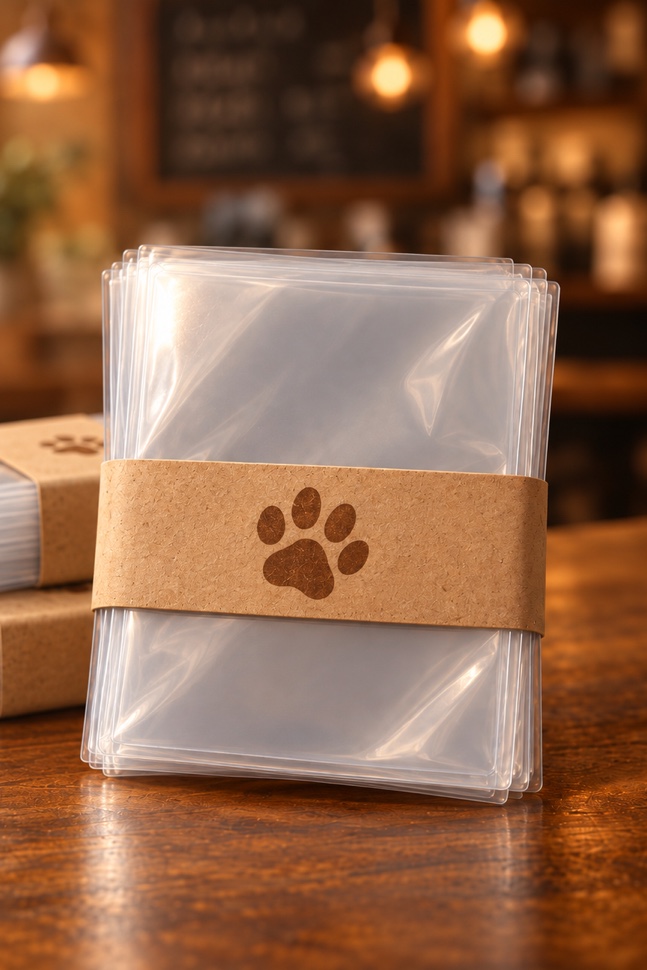
Sleeve
Halves any damage. The card can still be knocked, but every hit is cut in half. A Credit apiece in the Market, or two Biscuits.
Use it on anything you mean to keep.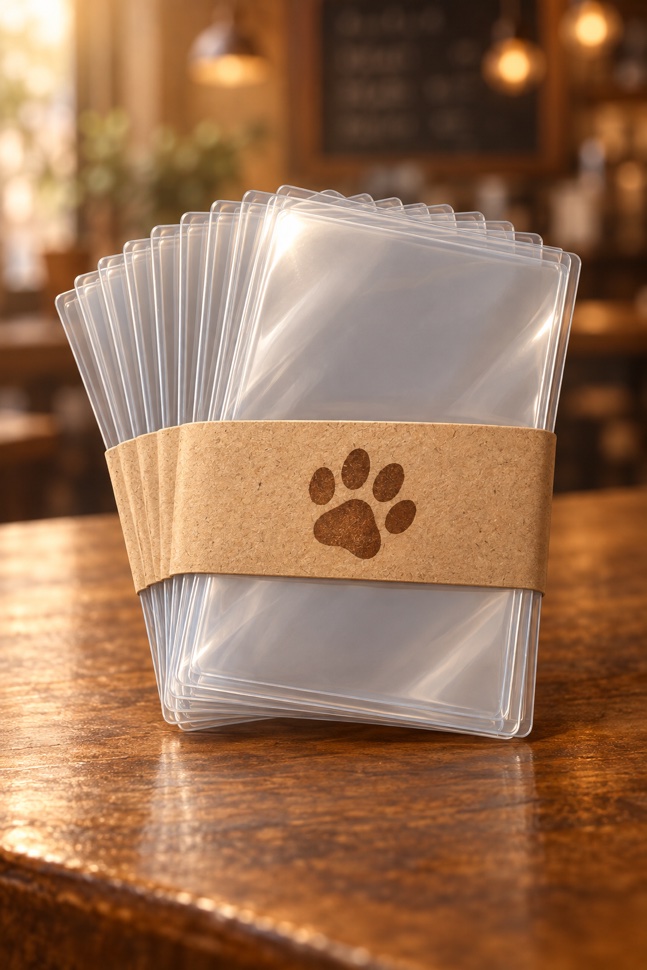
Top loader
Cuts the chance of damage. A rigid case. Most knocks never reach the card at all; only a hard one gets through, and then at full strength. Ten Credits, or twenty Biscuits.
Use it on the cards you would hate to see scratched.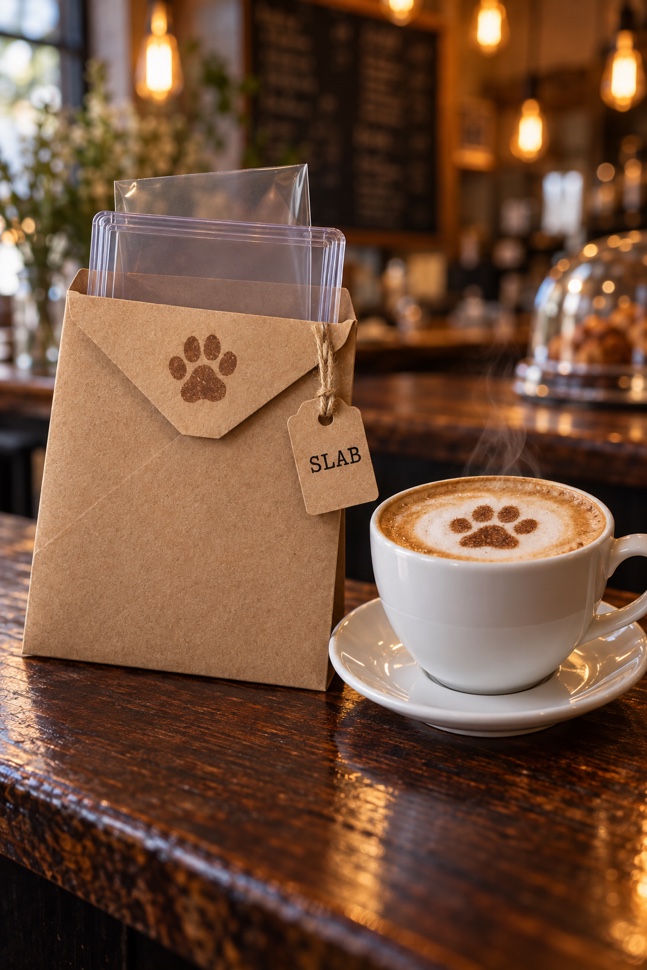
Grading kit
Sends the card to SLAB. It comes back graded, in its slab, with the grade on the plate, and from then on it can never be damaged again. Thirty Credits or sixty Biscuits, and the kit includes the sleeve and the loader for the trip.
Use it on the cards that define your collection.Sleeves and loaders are how you sort
Protection is also the way you mark your own mind, the same as at a kitchen table with a box of cards. Flipping through four copies of a card, the ones you mean to keep get a sleeve, a Credit apiece, and the ones you don't stay bare for the merge or the donate pile. A card you think you might send to SLAB one day goes in a top loader: it is safer while you decide, and it says "register me" every time you see it. Both are preparation for the next step, and both show on the copies page, so when you come back to a card with three or four copies, the sleeves tell you which ones you already judged.
Damage
What a card is born with. Every copy is minted with its own condition, and it is rolled at the mint, not chosen. Two things are fixed for life: centering, on each axis, and the marks of the press, surface blur and ink dots. Two more come from the cutting die, edge cutting and corner cutting. Most copies come out clean; a few come out with a hairline you have to hunt for; now and then one is a mess. That is what makes two copies of the same card different, and why a perfect one is worth registering.
What life adds. Scratches, edge wear and corner dents. A card only takes these when it changes hands. Donating a card is a trade with the house, so it rolls. Sending a card to SLAB is a trip through the post, so it rolls. Sitting in your collection, opening it from a pack, sleeving it, looking at it: none of that touches it. Each knock is a roll of a twenty-sided die, and the sleeve, the loader and the slab change the roll:
- Bare: a roll of 11 or better lands a hit, and the hit is one to six points.
- Sleeved: the same roll, but the points are halved, rounding down. A one-point hit becomes nothing.
- In a top loader: only a 16 or better lands a hit, at full points. The loader stays on the card: donate, merge or grade it and the loader goes with it.
- Graded: never rolled.
A hit lands on the surface as a scratch most of the time, on an edge sometimes, and on a corner now and then. Centering and the press marks never change; no knock can make them worse, and nothing can make them better.
How you see it. Damage is drawn on the card itself, the way it would look in your hand: scratches catch the light, edges fray, corners dent. Click the card to hide the marks and see the art clean, click again to bring them back. Every copy's own history is under it on its page, one line per event, so you can see exactly when a mark arrived and why. The number behind the marks stays hidden until SLAB seals the card and prints the grade on the plate.
Grading
SLAB is the Standardized Loot Assessment Bureau. Open a card you own, click Grade, and a kit is spent. The card is packed in the kit's sleeve and loader and posted. Three hands touch it on the way: you packing it, the post, and the bureau opening the case. Each is a roll, and with the kit's protection about one trip in ten takes any damage at all, usually a point. That is why a sealed grade is never quite guaranteed, even for a perfect card.
The bureau holds a card for ten hours, and you have three slots, so three cards can be away at once. The Grading page shows the slots, what is in them, and when each card is back. If every slot is full, or you are out of kits, the card goes on your pending list instead, so you can come back to it. A card at the bureau is locked: it cannot be sleeved, donated, or merged until it is home.
When it comes home it is graded, and the plate tells everyone what it is.
Registration
& Grading
Illustrated by W. W. Denslow
#79 The Cowardly Lion C
TWWOZ79-2-1

Registration
& Grading
Illustrated by Don Butto
#13 Belgium C
FLAG113-15-1 OC
Reading the plate
- The die is the grade, 1 to 20. A card with nothing wrong with it at all rolls a Nat-20, Flawless, and wears the black badge. A twenty is Gem Mint, a fresh card with a hair out of place. The numbers fall from there; nothing that comes out of a pack grades below Very Good.
- The band along the bottom is the grade's name, in the grade's colour: black for 20, red for 17 to 19, gold for 14 to 16, purple for 10 to 13, blue for 7 to 9, green for 4 to 6, grey below.
- The serial is the set's code, the card number, the mint number, and the registration number. TWWOZ79-2-1 is Wizard of Oz card 79, the second copy ever minted, and the first of that card to be registered. Low numbers are the point.
- OC after the serial means the print is off-centre by 30/70 or worse. It is part of the grade already; the chip just says why.
The grades
| Nat-20 | Flawless | 20 | Gem Mint | 19 | Nearly Gem Mint |
| 18 | Mint | 17 | Near Mint-Mint | 16 | Near Mint |
| 15 | Excellent | 14 | Very Good-Excellent | 13 | Very Good |
| 12 | Good-Very Good | 11 | Good | 10 | Good Enough |
| 9 | Fair | 8 | Fair Use | 7 | Almost Fair |
| 6 | Pretty Bad | 5 | Bad | 4 | Xtra Bad |
| 3 | Minor Poop | 2 | Poop | 1 | Xtra Poopy |
Book value
A graded card carries a book value in Credits, the guide price for the Market and the store. It is the card's rarity weight times ten, scaled by the grade: a straight line up to 17, then 18, 19 and 20 pull away at three, four and six times, and Flawless is ten times. Centering and scratches matter at the top, where the money is.
| Common | Uncommon | Rare | Very Rare | Xtra Rare | |
|---|---|---|---|---|---|
| Grade 12 | 22 | 44 | 110 | 220 | 550 |
| Grade 17 | 27 | 54 | 135 | 270 | 675 |
| Grade 18 | 30 | 60 | 150 | 300 | 750 |
| Grade 19 | 40 | 80 | 200 | 400 | 1,000 |
| Grade 20 | 60 | 120 | 300 | 600 | 1,500 |
| Flawless | 100 | 200 | 500 | 1,000 | 2,500 |
On the Market you may list a card for anything from half its book value to three times it; the store's Sell now pays half, on the spot, and puts the card back on the Market at book. A grading kit costs 30, so grading a common only pays from a 19 up; the uncommons and rarer are where a good grade is worth chasing.
What a sealed card can still do
It can be looked at, shown off, donated, traded, listed on the Market or sold to the store. It cannot be sleeved or loaded, because it no longer needs to be, and it cannot be merged. Registering pays 20 XP toward your Collector Score, and the registration number on the plate is yours for good.
Next upDiscard and donateSpare cards become someone else's pullEvery card here is earned, never bought. Credits arrive every hour, and the sets are waiting.
Explore the sets